Pink Bow Flower Girl Design: A Practical Review
As a designer who spends more time staring at stitch simulations than I care to admit, I have learned that not every cute graphic translates well into thread. We have all been there: you find a digital embroidery file that looks adorable on the screen, only to realize once it hits the fabric that the details are lost, the density is too high, or the scale is completely wrong for the intended product. That is why I approach every new asset with a critical eye, looking beyond the initial charm to see how it performs in the real world. Recently, I took a close look at the Pink Bow Flower Girl Embroidery Design, and I want to share my honest assessment of how this piece holds up for actual production.
First Impressions and Visual Mood
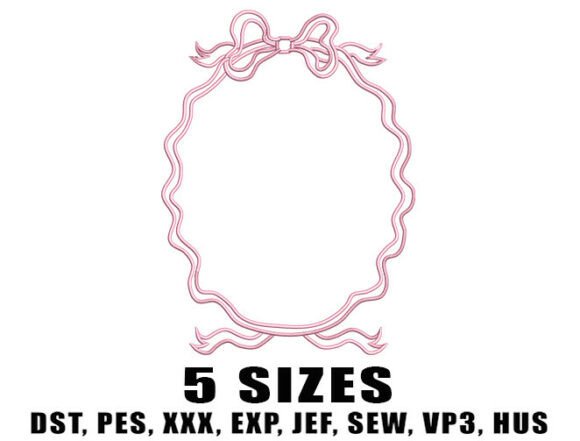
The first thing that strikes you about this design is its inherent softness. It features a whimsical round frame adorned with two heart-tied bows, creating an immediate sense of romance and innocence. This is not a bold, aggressive graphic; it is delicate. The mood it creates is distinctly feminine and gentle, making it an obvious candidate for the Nursery category. However, do not let the "girly" label limit your thinking. The structural integrity of the round frame gives it a classic badge-like quality that can work across various applications if styled correctly.
Visually, the layout is balanced. The symmetry of the two bows anchors the circular frame, preventing the design from feeling lopsided or chaotic. For an embroidery project, balance is crucial because uneven weight distribution can cause hoop burn or fabric distortion. From a purely aesthetic standpoint, this design promises a clean, professional look that appeals to customers seeking high-quality handmade products.
Real-World Application: The Baby Shower Gift Test
To truly evaluate a design, you have to imagine it on a physical item. I recently had a client request a set of personalized gifts for a baby shower. They wanted something that felt boutique-quality but not overly expensive to produce. I considered using the Pink Bow Flower Girl Embroidery Design on a set of muslin swaddle blankets and a small tote bag for the mother-to-be.
This scenario highlights the importance of size versatility. The design comes in five distinct sizes, ranging from 3.8 inches to 7.8 inches. For the swaddle blanket, I opted for the mid-range 5.8-inch size. It was large enough to be seen clearly against the textured muslin but small enough to remain delicate. For the tote bag, I used the largest 7.8-inch option. The scalability here is a significant advantage for Etsy sellers and small shop owners who need one asset to cover multiple product lines without purchasing separate files.
The result was charming. On the tote bag, the design served as a lovely focal point. On the baby item, it acted as a sweet accent. Customers reacting to these types of personalized gifts often comment on the "thoughtfulness" of the detail. This design delivers that emotional connection because it feels intentional rather than generic.
Technical Performance and Stitching Clarity
Let us talk about the mechanics. While I do not have the exact stitch count or file format specifications in front of me, the visual complexity suggests a mix of satin stitch for the bows and potentially fill stitch or running stitch for the frame details. When working with round frames, pay close attention to the stitch density. If the frame is too dense, it will pucker lightweight fabrics like cotton voile or jersey knits.
I strongly advise testing this design on scrap fabric before committing to your final finished product. Check how the threads lay on both woven and knit materials. For the bows, ensure your thread colors have enough contrast against the background fabric. A pink bow on a white shirt is classic, but a pastel pink on a heather gray sweatshirt might get lost. Always run a test stitch-out to verify clarity.
Another critical factor is the hoop size. Since the largest version is 7.8 inches, you will need a hoop that accommodates this width comfortably. Do not try to squeeze a 7.8-inch design into a 7-inch hoop; the margin for error is too small, and you risk needle hits or distorted edges. Always confirm your machine’s maximum hoop capacity before purchasing or planning a large-scale commercial embroidery run.
Fabric Considerations and Stabilizer Choice
The success of any machine embroidery design relies heavily on the interaction between the thread, the fabric, and the stabilizer. For this specific design, I recommend using a cut-away stabilizer for stretchy fabrics like t-shirts and sweatshirts to prevent stretching out over time. For woven fabrics like tea towels or pillow covers, a tear-away stabilizer might suffice, provided the fabric texture is stable.
Be cautious with very thin or slippery fabrics. The round frame requires precision. If the fabric shifts even slightly during stitching, the circle will look like an oval, ruining the professional appearance. Use proper hooping techniques, perhaps with a floating method if the garment is difficult to hoop directly. This is especially important for custom apparel where the customer expects perfection.
Commercial Viability for Craft Businesses
For craft business owners, versatility is key to profitability. This design fits neatly into several lucrative niches: baby embroidery, wedding favors, and romantic labels. It works beautifully as an embroidered patch if you stitch it out on felt or twill and then applique it onto another item. This technique adds dimension and perceived value, allowing you to charge more for the small shop product.
However, transparency is vital. Before selling items made with this design asset, you must confirm the licensing terms. Does the license allow for commercial use? Can you sell the digital embroidery file itself, or only the physical finished product? Never assume. Read the license agreement provided by the creator. Protecting your business from copyright issues is just as important as choosing the right thread color.
Where to Use Caution
While this design is versatile, it is not universal. Avoid using the smallest 3.8-inch size on highly textured fabrics like terry cloth or heavy fleece. The fine details of the heart-tied bows may disappear into the pile of the fabric. Similarly, be careful with dark fabrics if you are using light threads; you may need an underlay stitch to prevent the background color from showing through, which can add bulk.
Also, consider the placement. Placing this round design on a curved surface, like the front panel of a cap, requires careful centering. If it is off-center, the asymmetry will be glaring. Use a printable mockup or paper template to visualize the placement before you start stitching. This simple step saves time and reduces waste.
Final Verdict
The Pink Bow Flower Girl Embroidery Design is a solid addition to any designer’s library, particularly for those focusing on feminine, baby, or romantic markets. Its strength lies in its clean lines, scalable sizes, and emotional appeal. It is not just a pretty picture; it is a functional tool for creating engaging holiday embroidery projects, tote bag designs, and boutique branding elements.
By paying attention to stabilizer choice, thread contrast, and licensing, you can leverage this design to create high-value items that resonate with customers. It is a reminder that good design is not just about aesthetics, but about how well it translates from screen to stitch. For creative entrepreneurs looking to expand their design assets with reliable, crowd-pleasing motifs, this piece deserves a spot in your rotation.